
From ‘Biwi’ to ‘Apno’: How Indian Advertising Has Redefined Gender Roles
For decades, Indian advertising spoke in a shorthand everyone understood, and rarely questioned. Women belonged in kitchens. Men arrived home from work. Caregiving was instinctively feminine. Authority was quietly masculine. Ads didn’t invent these ideas, they mirrored them. And in doing so, they normalised them, frame by frame, line by line.
Any seasoned advertising agency in India will admit this wasn’t always deliberate. It was simply “how things were done”. Scripts followed social defaults. Casting reflected everyday assumptions. Language carried inherited bias.
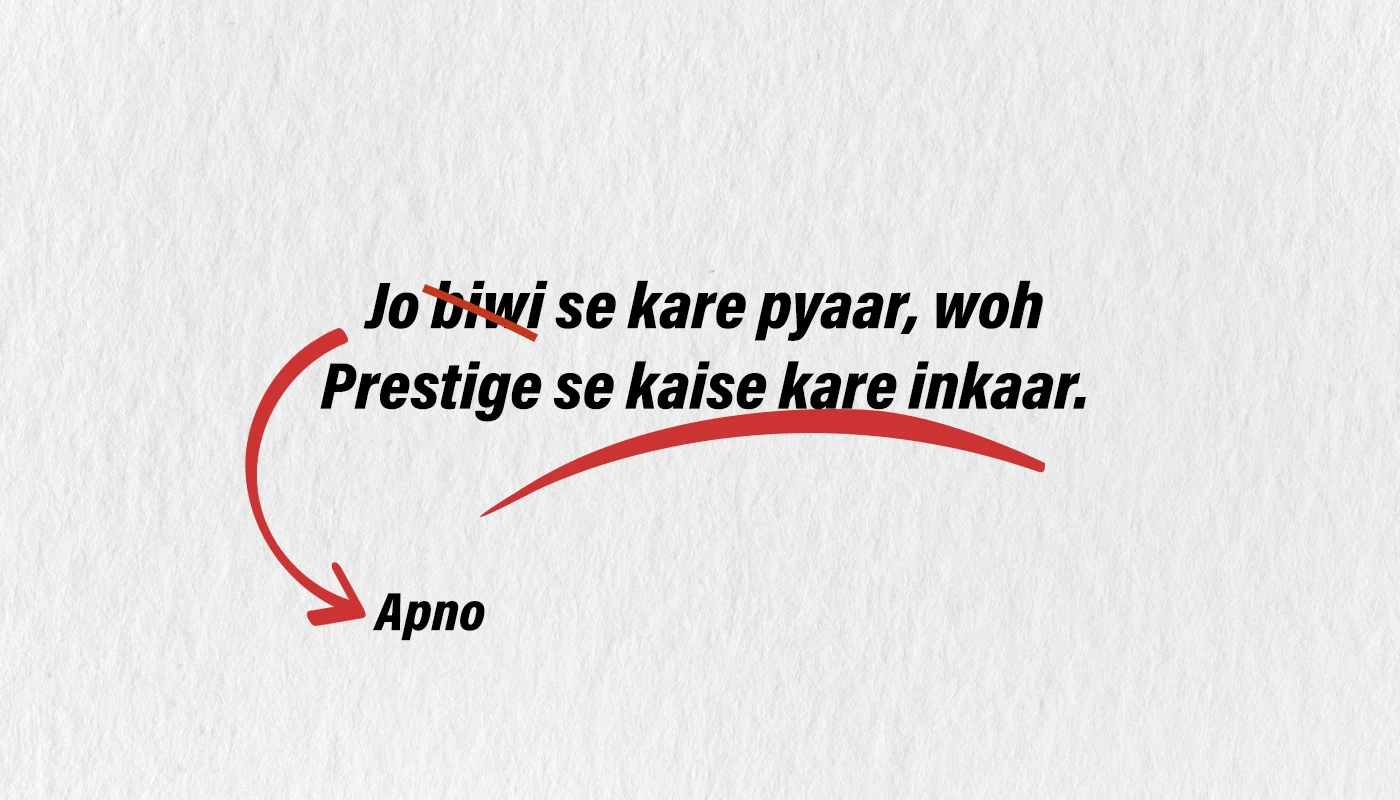
Then came moments, small, almost invisible shifts that changed everything. One of the moments that runs to mind is Prestige’s quiet but powerful evolution. From the iconic line “Jo biwi se kare pyar, wo Prestige se kaise kare inkaar”
to “Jo apno se kare pyar, wo Prestige se kaise kare inkaar.”
At first glance, it felt like a copy update. But culturally, it was seismic. Biwi narrowed responsibility to a wife. Apno widened it to everyone. Domestic labour moved from being gendered to shared. The kitchen stopped being hers and became ours.
That single word signalled something larger: Indian advertising was beginning to rethink the roles it had long taken for granted. And the modern advertising agency was no longer just selling products, it was participating in cultural reframing.
When Advertising Reflected Society Without Question
To understand the shift, we need to acknowledge where Indian advertising started.
Early Indian advertising was deeply functional and deeply gendered. FMCG brands showed women managing households with effortless grace. Financial products were explained to men in suits. Even aspirational ads like homes, holidays, cars followed predictable casting.
This wasn’t unique to India, but the scale mattered. Advertising reached millions daily so, gender roles in advertising quietly reinforced what society already believed:
- Women as caregivers, planners, sacrificers
- Men as providers, decision-makers, earners
The evolution of Indian ads during this phase was more about production quality than perspective. Bigger budgets. Better visuals. But the same social grammar.
Advertising didn’t challenge norms because it wasn’t expected to. Its job was familiarity, not friction.
Language, Casting, and the Power of the “Normal”
What often gets missed in conversations about representation is how subtle advertising language can be.
A single word, biwi, maa, pati, does more cultural work than a thousand visuals. Casting choices, who speaks first, who explains, who decides, these cues shape perception.
In early Indian advertising campaigns, women weren’t silent. They were just confined. Confined to certain spaces. Certain emotions. Certain responsibilities and audiences accepted it because it felt real. Advertising didn’t exaggerate gender roles, it distilled them.
Which is why change, when it came, had to be equally precise.
The Turning Point: When Brands Started Asking Better Questions
The last decade marked a noticeable shift. Not because society suddenly transformed, but because brands began listening more closely.
One of the clearest signals came from Ariel’s “Share the Load” campaign. It didn’t shout. It didn’t moralise. It simply asked: Why is laundry still seen as a woman’s job?
What made it powerful wasn’t the question, it was the mirror it held up. For the first time, representation of women in Indian ads wasn’t aspirational or idealised. It was honest, slightly uncomfortable, and deeply recognisable.
Surf Excel’s “Daag Achhe Hain” took a parallel route. While not explicitly about gender, it consistently showed children, and parents, beyond rigid roles. Mothers weren’t perfect homemakers, they were participants in messy, real life.
Then came Tanishq. Perhaps the most discussed example of inclusive advertising in India. Whether it was remarriage, interfaith families, or modern motherhood, the brand leaned into brand storytelling in India that reflected lived realities rather than idealised traditions.
These campaigns didn’t happen by accident. They reflected a broader realisation within the advertising ecosystem: culture had moved, and advertising needed to catch up.
The Modern Advertising Agency as a Cultural Participant
Today, the role of an advertising agency has expanded far beyond communication. Agencies are no longer just interpreters of brand briefs, they’re interpreters of social context.
This comes with responsibility and risk.
Modern agencies now actively debate:
- Who is being represented, and who isn’t
- Whether a story reinforces norms or gently questions them
- How far a brand can go without losing credibility
The role of advertising agencies in shaping social narratives is no longer theoretical. It’s operational. Every storyboard choice carries cultural weight.
And importantly, agencies now recognise that progress doesn’t mean perfection. It means awareness.
Progress Is Real but Uneven
It’s tempting to frame this evolution as a straight line from regressive to progressive. The truth is messier. For every gender-inclusive campaign, there are dozens that still default to stereotypes. For every bold narrative shift, there’s caution driven by market fear. And that honesty matters.
Cultural shifts in Indian marketing don’t happen uniformly. Urban audiences may embrace nuance faster. Regional contexts vary. Categories behave differently. What works for jewellery may not work for finance.
The best advertising today doesn’t pretend otherwise. It acknowledges complexity instead of flattening it.
Why This Shift Matters More Than Ever
Audiences today don’t just consume advertising, they interrogate it. They bring lived experience into interpretation and they expect brands to keep pace.
This is where ‘how Indian advertising has changed gender roles’ becomes more than a cultural discussion. It becomes a business imperative.
Consumers reward brands that feel current, thoughtful, and real. They disengage from those that feel dated, tone-deaf, or performative. Importantly, today’s viewers don’t expect advertising to be perfect. They expect it to be aware.
And that awareness often begins with language. With casting. With who gets to own which spaces.
Just like biwi becoming apno.
What the Future Looks Like for Indian Advertising
The next phase of Indian advertising won’t be about grand statements. It will be about quiet normalisation.
Shared domestic roles without commentary. Women in authority without explanation. Men in caregiving roles without punchlines. The most powerful future campaigns will make inclusivity feel unremarkable.
For advertising agencies, this means listening harder than speaking. Observing culture before packaging it and accepting that sometimes the most progressive choice is restraint because the audience has already moved on. Advertising is simply catching up.
Where This Leaves Us
Indian advertising has come a long way, from reinforcing inherited roles to gently reworking them. Not through lectures, but through language. Through framing. Through small, precise shifts that ripple outward.
For any advertising agency working today, understanding this evolution isn’t optional. It’s foundational.
Because the stories brands tell don’t just sell products.
They signal who belongs. Who shares responsibility. And who we imagine ourselves becoming.
- Jonathan Koshy Mukkathu
Get in Touch with Us
Let’s talk about building stories that reflect the world as it is, and where it’s headed.